
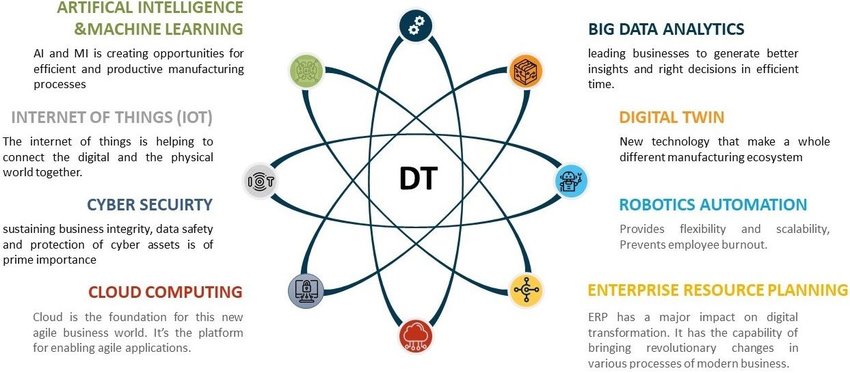

Key technologies for digital transformation: from RPA to cloud. The fifth section of Digital Transformation: Changing Organizational Habits explores the essential technologies to successfully drive digital transformation. Explore how technologies like RPA, low- and no-code platforms, flexible security policies, and public cloud can drive organizational change.
1. RPA, the start of digital transformation you can feel
As a first step in digital transformation, robotic process automation (RPA) brings immediate and tangible change to businesses. RPA maximizes work efficiency by automating simple, repetitive tasks.

1.1. Automate tasks
- Eliminate repetitive tasks: RPA automates repetitive tasks such as data entry, report generation, and email processing. This frees up employees to focus on more creative and high-value work.
- Increase efficiency and productivity: Automated processes reduce errors and speed up tasks, improving overall work efficiency and productivity.
1.2. Cost savings and ROI
- Cost savings: Adopting RPA not only reduces labor costs, but also saves money due to reduced work hours.
- Fast ROI: RPA solutions offer a high return on investment (ROI) in a relatively short period of time. This makes them an attractive option for SMBs as well.
2. Using low-code and no-code platforms
Low-code and no-code platforms accelerate digital transformation by providing application development tools that are easy for non-developers to use.
2.1. Rapid development and deployment
- User-friendly interface: Provides an intuitive interface, such as drag-and-drop, so you can develop applications without complex coding.
- Quickly respond to business needs: Quickly respond to the changing needs of your business, so you can quickly develop and deploy the solutions you need.
2.2. Operate an agile business
- Business process improvement: Rapidly improve and automate business processes with a low-code/no-code platform to increase the agility of your business operations.
- Accelerate innovation: Quickly turn innovative ideas into real-world applications without straining existing IT resources.
3. Security regulations shouldn’t get in the way of DX
Security is an essential aspect of digital transformation, but excessive security regulations shouldn’t stifle innovation.
3.1. Flexible security policies
- Balanced approach: It’s important to find a balance between security and innovation. Security policies should be flexible to ensure that excessive security regulations don’t stifle innovation.
- Manage risk: It’s important to keep risk at a manageable level, not avoid it entirely. By managing risk reasonably, you can foster innovation.
3.2. Blending security and innovation
- Modernize security technology: Adopt the latest security technologies and solutions to address security challenges in innovative ways.
- Educate and raise awareness: Security is not only about technology, but also relies heavily on employee awareness and behavior. Educate your employees on security to increase security awareness and create an innovative environment.
4. Utilizing the public cloud is a fundamental part of DX
Public cloud is a fundamental building block of digital transformation, providing flexibility and scalability.
4.1. Agility and scalability
- Elastic infrastructure: The public cloud gives you the ability to flexibly scale resources up or down based on your business needs. This allows you to respond quickly to rapid growth and change in your business.
- Cost-effectiveness: The public cloud offers a model where you use and pay for the resources you need with no upfront investment. This allows businesses to utilize their capital more effectively.
4.2. Cloud-based innovation
- Rapid development and deployment: Public cloud platforms enable rapid application development and deployment. This is essential for responding quickly to market changes and bringing innovative solutions to market.
- Global accessibility: Cloud services provide global resources that can be accessed from anywhere. This enables businesses to operate from anywhere in the world and serve customers and collaborative partners in different regions.
These technologies play a key role in driving digital transformation. It’s important to increase work efficiency with RPA, enable rapid development with low- and no-code platforms, foster innovation with flexible security policies, and make your business agile and scalable with public cloud. With this technological approach, organizations can become more competitive and achieve sustainable growth in the digital age.